What is API Testing?
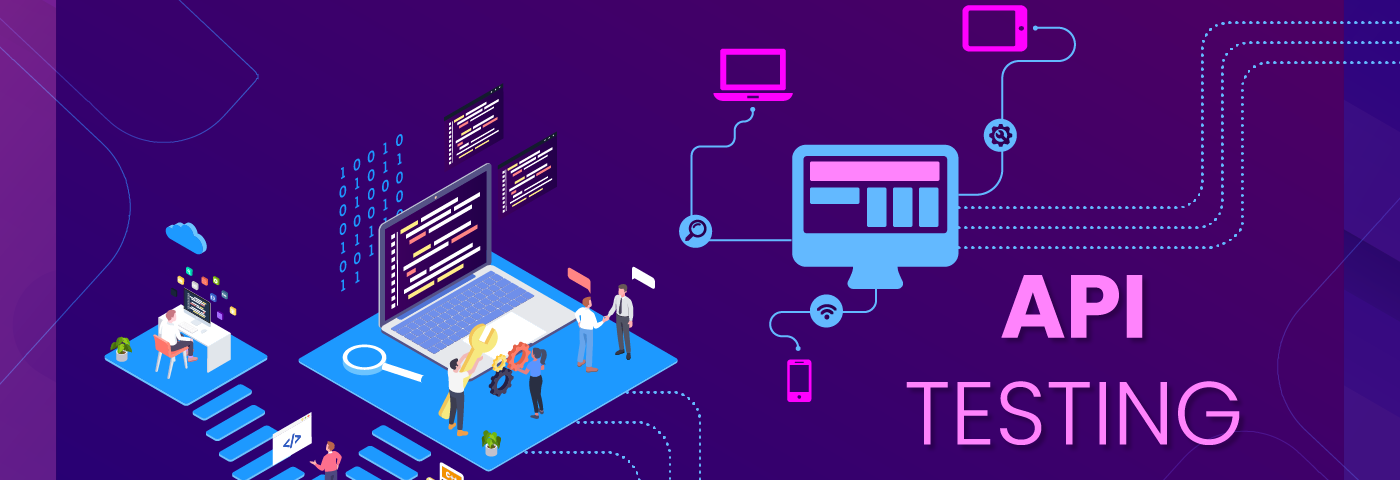
API is an abbreviation that stands for an application programming interface. APIs allow communication and interaction between programs. The “open up” a variety of methods and processes for other programmers. It is essential to test an API thoroughly in order to ensure that it is reliable, secure, and scalable. API testing is different from UI testing because it identifies problems earlier than UI testing. API tests are used to test API-enabled apps. They modify the parameters of each API request in different ways so that they can check their functionality and identify problems.
These elements can be tested as part of an API:
- Functional Testing
- Load testing
- Security Testing
As part of functional testing, it takes a JSON payload. It then returns an API response code as well as the response content. To determine how much traffic an API can handle, it runs a series of rigorous tests under various loads. Penetration testing is used to validate authentication and check for security flaws such as HTTP-sensitive data.
API Testing in Software Development Offers Many Benefits
- Achieving efficiency in terms of time
Because API testing is not dependent on GUI testing, it may start earlier than GUI testing.
Additionally, API tests are much quicker than UI tests. When it comes to loading and rendering time, there is no comparison between UI and API testing. It takes about 3 to 5 minutes to register and log in through the user interface, while API testing takes only 30 seconds.
- Lower Expenses
It is strongly connected to the idea of time efficiency. This advantage is strongly related to the previous one in terms of cost-effectiveness. Automated API tests can be performed faster, which results in more efficient and cost-effective use of resources. This in turn helps to reduce testing costs. API testing may be performed before you do any GUI testing. This is because API tests can be run right after the business logic has been established. This will allow you to detect the problem quickly. Because it’s cheaper to fix the problem early, application modifications are less expensive. API testing is a great way to keep costs down and allows the QA team to identify and fix issues early.
- Impartiality Of Technological Advancement
Since the data is sent using JSON or XML and compromised HTTP requests and HTTP replies, API testing is language-independent. The QA team can use any language compatible with these technologies, such as JavaScript, Java Ruby, Python and PHP. ).
- Higher Levels Of Stability In The Testing
API interfaces are more stable than graphical user interfaces (GUIs) and don’t change to meet new requirements from users and stakeholders. APIs come with detailed documentation to ensure that QA engineers have easy access to the latest test suites. Because APIs are stable, they are much easier to maintain.
- Increased Test Coverage
Automated API testing is often more comprehensive and detailed than unit tests. Contrary to unit tests which focus on the application’s individual functions, issues can often arise when there are many layers. These bugs won’t be caught by unit tests, but API tests were specifically designed to verify that all components of the system work as they should before being used. API testing helps to identify flaws in interfaces, servers, and databases. This results in better software quality and a better experience for users.
The Bottom Line
It is generally accepted that API testing is a better match to Agile methods’ Continuous Test. APIs that are not properly tested can cause problems in both the API and the calling program. It is a mandatory test in software engineering.